Sweet potatoes may be a Southern staple, but with the right timing and technique, you can grow a delicious crop right here in Wisconsin!
Sweet potatoes are incredibly versatile and store well through the winter—perfect for sustainable living and off-season meals. They’re also relatively pest-resistant and thrive with minimal inputs once established. With a bit of planning, even our cooler climate can yield a bountiful harvest.
These nutrient-packed tubers love warmth, so the key to success lies in creating the right conditions despite our shorter growing season. Whether you’re aiming to grow for your family or your homestead market stand, here’s everything you need to know to get started.
Let’s get into it.
Starting Sweet Potato Slips Indoors
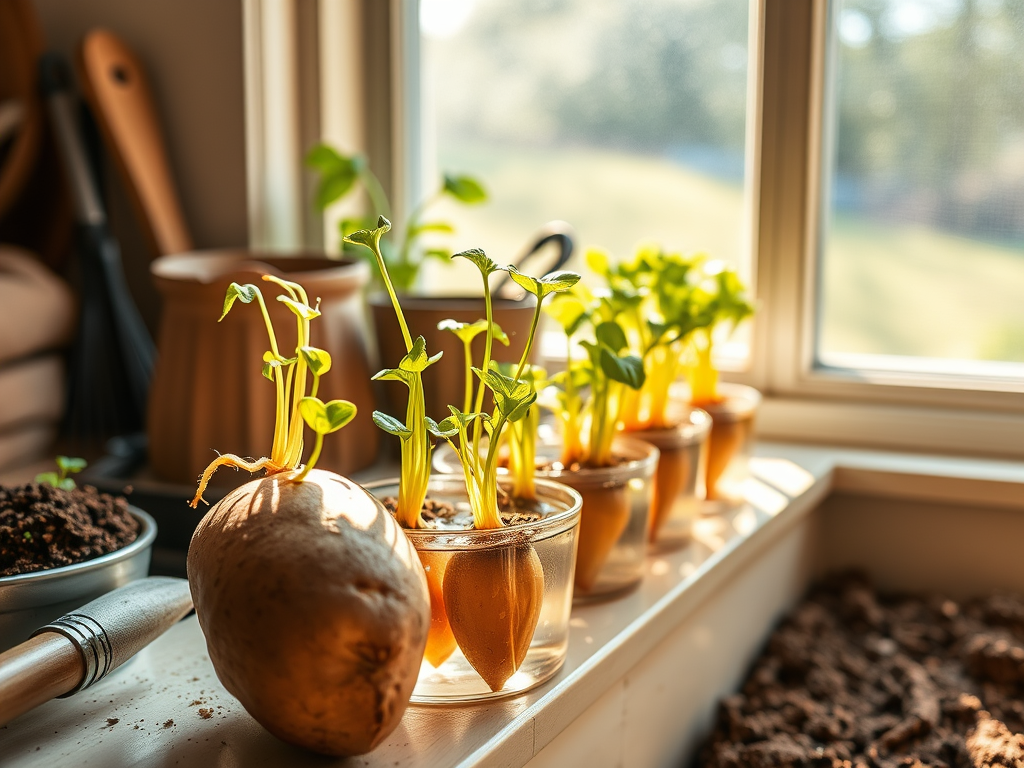
Sweet potatoes aren’t grown from seeds—they’re started from “slips,” which are sprouts from mature sweet potatoes. You’ll want to begin this process 8–10 weeks before your last frost date, typically around late February to early March in Wisconsin.
How to Start Slips
1. Choose a healthy, organic sweet potato. Store-bought sweet potatoes may be treated to prevent sprouting.
2. Place it in water or moist soil. Either suspend the sweet potato in a jar with toothpicks (half submerged in water) or bury it halfway in damp soil in a warm spot.
3. Provide warmth and light. A sunny windowsill or grow light works well.
4. Wait for slips to grow. Once they reach about 6 inches long, twist them off and place in water to root.
By planting time, you’ll have a bundle of rooted slips ready for the garden!
Preparing the Soil for Sweet Potatoes
Sweet potatoes thrive in loose, well-drained soil with a slightly acidic to neutral pH (5.5 to 6.5). If your soil is heavy clay (common in Wisconsin), build raised beds or mounds and amend the soil with:
Compost
Sand
Aged manure
Avoid nitrogen-rich fertilizer—it encourages vine growth at the expense of tubers.
Transplanting Outside
Once all danger of frost is past—typically late May to early June—you can transplant your slips outside.
Planting Tips
Space slips 12–18 inches apart in rows about 3 feet apart.
Plant them deep enough to cover most of the stem.
Water well and mulch to retain warmth and moisture.
Caring for Your Crop
Watering: Keep soil consistently moist, especially the first month. Back off during the last few weeks to prevent tuber rot.
Weeding: Mulching helps suppress weeds and warms the soil.
Fertilizing: Use a low-nitrogen fertilizer if needed.
Sweet potatoes are heat-loving and drought-tolerant once established, but Wisconsin’s cooler nights may require black plastic mulch or row covers to keep the soil warm early in the season.
Harvesting Sweet Potatoes in Wisconsin
Sweet potatoes need 90–120 days to mature. Aim to harvest before the first frost—typically mid to late September. Watch for yellowing leaves as a sign of maturity.
How to Harvest
Use a garden fork to gently lift the tubers.
Handle with care—bruised sweet potatoes won’t store well.
Curing and Storing
After harvest, sweet potatoes must be cured for sweetness and longevity.
1. Cure in a warm (80–85°F), humid (85–90%) space for 7–10 days. A closet with a space heater and humidifier can work.
2. After curing, store in a cool, dark place (55–60°F). Properly cured sweet potatoes can last up to 6 months!
Tips for Success in Wisconsin
Choose short-season varieties like ‘Beauregard’, ‘Georgia Jet’, or ‘Centennial’.
Use raised beds or grow bags to increase soil warmth.
Start slips early and be ready to transplant the moment the weather turns.
Final Thoughts
With a bit of planning, growing sweet potatoes in Wisconsin is not only possible—it’s incredibly rewarding. From starting slips on your windowsill in winter to harvesting golden tubers in the fall, this homestead crop can be a powerful part of your family’s pantry and your garden’s rhythm.
Have you tried growing sweet potatoes in Wisconsin? Share your experience or tips in the comments below!
Until next time, my friend.





Leave a Reply