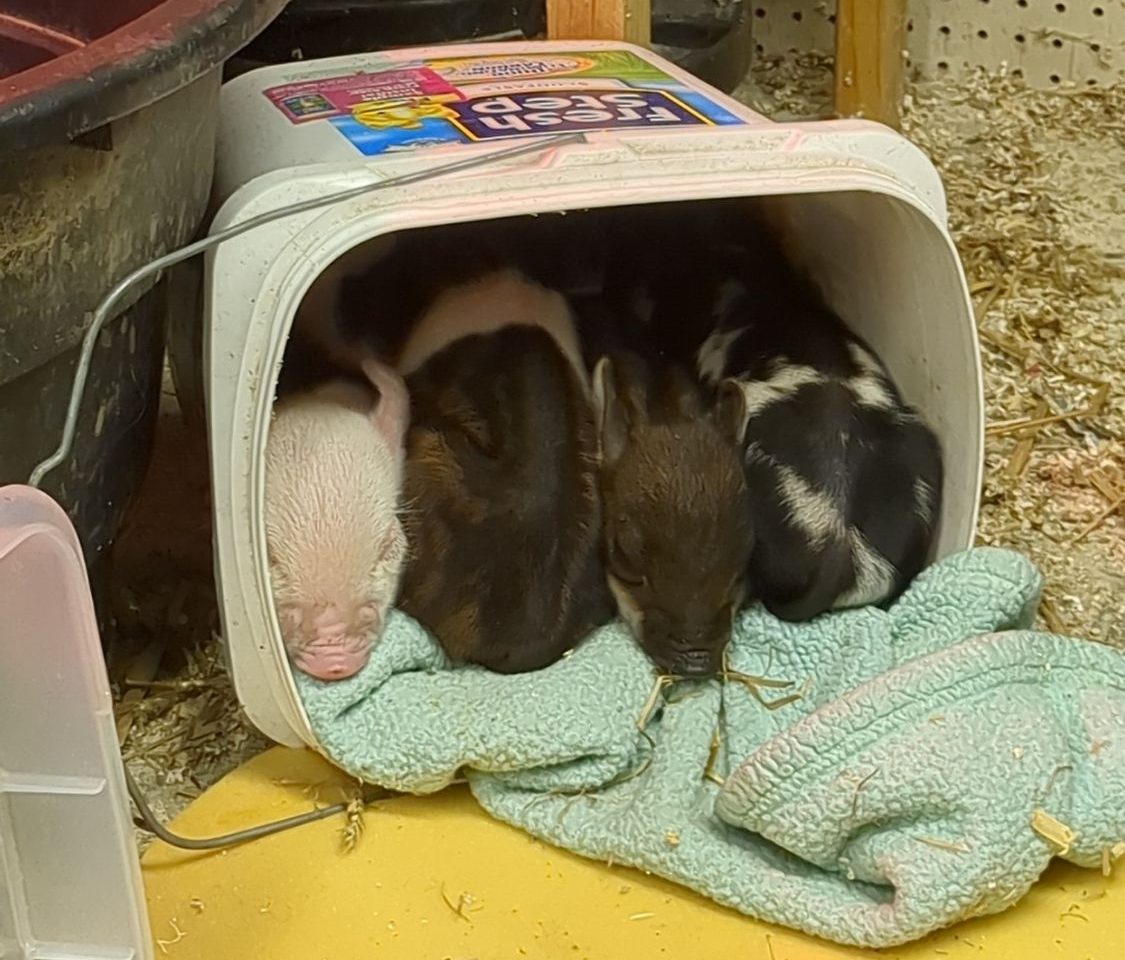
If you can get a piglet through the first night, there’s a good chance they’ll make it.
That first 12–24 hours are when most losses happen, especially with larger litters, weak piglets, or weather changes.
After experiencing our first night with piglets, I gained a whole new understanding of why large-scale pig operations are so strict about confinement during farrowing.
Confinement isn’t about cruelty—it’s about safety, and I learned that the hard way.
Let’s get into it.
The Case for Locking Down the Sow
For the sake of everyone involved—the sow, the piglets, and myself—I now see the necessity.
My sow had some short comings as a first time mumma. I was not able to get to three of the piglets quick enough to assist due to her aggressive behavior. Looking back, I truly believe all of it could have been prevented if I had restricted her movement more. I wanted to offer her freedom, but it came at a high cost that I continue to pay for.
Furthermore, attempting to handle the piglets—whether it’s castrating the males or just doing wellness checks—is nearly impossible without putting myself at risk. She’s so protective, which is natural, but it makes basic care difficult and even dangerous.
Lesson learned. Now I know better for next time in more ways than one.
What Matters Most
There are a few key elements necessary to ensure the piglets have the best shot at making it through the first night.
1. Warmth
Piglets are born wet and have no fat. They get cold fast. If they chill before nursing, it’s usually over. I use heat lamps, dry towels, and plenty of straw. In some cases, I’ve brought piglets inside to warm them up against my body or with a heating pad.
2. Colostrum or Milk
Colostrum is ideal for the first 12–24 hours — it gives energy and immune support. After that, warm milk every few hours keeps them going. I attempted to use fresh goats’ milk, but it must not have had enough fat content for my piggies. I eventually purchased a multi-species milk replacer and they have been excelling ever since.
I learned a small pinch of sugar and a bit of electrolyte powder in the bottle helps boost energy, especially for weaker piglets if necessary.
A couple drops of olive oil will help with constipation.
3. Clean, Dry Bedding
Wet piglets die. Keep their area dry and draft-free. I use fresh straw, change it out as needed, and check it frequently the first couple of days.
Once They’re Through the First Night
If they’re warm, have full bellies, and make it to day two, they’re usually fine. You’ll notice they get louder, more active, and start competing for food. That’s a good sign. Piglets bounce back quickly once they’re stable.
Side note: I had a piglet begin to scour on day 5. I was advised to hit him with some iron, but the store was already closed so I threw a handful of dirt in there to help until I could get to the store. The next morning, he had almost made a complete recovery.
If your piglets are raised on concrete, they will need iron supplementation or access to dirt in some fashion. I took some of my clean, composted dirt for my piggies.
Piglet First-Night & Emergency Supply List
This is what I keep on hand for births, bottle feeding, and minor procedures like castration:
Feeding
Milk replacer (multi-species is fine)
Whole cow milk (backup)
Colostrum replacer (multi-species is fine)
Electrolyte powder (like Bounce Back)
Sugar or corn syrup
Nipples and bottles (lamb/kid style works well. I used my old baby bottles from when my children were small)
Measuring spoon & jar for mixing
Thermometer (to check milk temp ~100°F)
Warmth & Bedding
Heat lamp with clamp
Heating pad (for indoor warming)
Straw or pine shavings
Towels or rags
Crate or tote for separating piglets
Basic Health & Hygiene
Iodine spray or dip (for cords or wounds)
Nitrile gloves
Clean syringes (no needle) for feeding or meds
Paper towels or wipes
Gauze
What is the tape that is used to wrap injuries as it adheres to itself?
Saline Solution
Stitches Kit or Flavorless Floss and sewing needle (in case of emergency)
Needle and syringe with iron supplement, if necessary
Castration/Procedure Essentials
Sharp blade or scalpel
Gloves
Iodine spray
Blood stop powder or cornstarch
Old towel for restraint
Antibiotic ointment (optional)
I will link how to perform castration on piglets in a later post
Final Thoughts
That first night sets the tone. If you act early — warm them up, get something in their belly, and keep things dry — most piglets will pull through.
It’s exhausting, but worth it. These little lives depend on fast action, not perfection. Every piglet that makes it through that first night is a small success.
“He who refreshes others will himself be refreshed.”
Proverbs 11:25
Have you farrowed before? Drop your story in the comments!
Stewardship, Diligence, Compassion, and God’s Care for the Small
“Let us not become weary in doing good, for at the proper time we will reap a harvest if we do not give up.”
Galatians 6:9 (NIV)
Perfect reminder when you’re bottle-feeding at 2 a.m. and questioning your sanity.
“Whoever is righteous has regard for the life of his beast, but the mercy of the wicked is cruel.”
Proverbs 12:10 (ESV)
A solid verse about caring for animals with diligence and kindness — even when it’s inconvenient.
“His master replied, ‘Well done, good and faithful servant! You have been faithful with a few things; I will put you in charge of many things.’”
Matthew 25:23 (NIV)
Speaks to stewardship — taking care of even the “least” tasks honors God.
“Sow your seed in the morning, and at evening let your hands not be idle, for you do not know which will succeed…”
Ecclesiastes 11:6 (NIV)
Reflects the unknowns of homestead work — some piglets will thrive, others may not — but keep doing the work.
“Whoever can be trusted with very little can also be trusted with much…”
Luke 16:10 (NIV)
A beautiful reminder that even caring for one piglet matters in the eyes of the Lord.
Until next time, my friends.





Leave a Reply